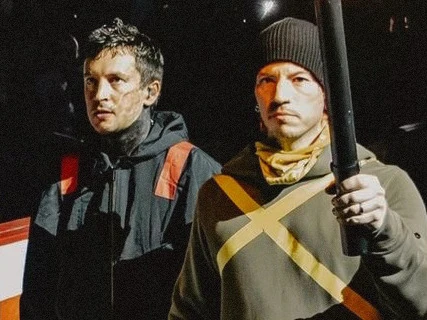
Morph
In Dema, the only way out is through—and you won't come back the same.

Morph isn't just another track in the Twenty One Pilots discography—it's the hinge on which the entire Trench narrative swings. Serving as a thematic bridge between the suffocating shadows of Blurryface and the defiant dawn of the Banditos, the song wrestles with transformation, identity, and the war between your truest self and the masks pressed onto you by society or your own inner demons. Its lyrics and music video don't just add to the lore of Dema; they crack it open, forcing you to stare into the mirror and ask: who are you when everything changes?
- Role
- Thematic centerpiece of the Trench era, exploring duality and change
- Affiliation
- Twenty One Pilots (Trench album)
- First appears
- Trench album (2018)
- Status
- Active in the lore as a recurring motif of transformation
Lore & Background
Morph is the moment of reckoning in the Trench saga—the split second between who you were and who you must become. The song's lyrics tremble with the terror of losing yourself while knowing that staying still is just another form of surrender. The music video traps Tyler Joseph in a claustrophobic, dimly lit room where he comes face-to-face with his own doppelgänger, a shadow-self that flickers between accusation and invitation. This isn't just a fight scene; it's a staring contest with the nine bishops (Nico) and the Bandito spirit clawing for dominance inside the same chest. The cracked mirror, the pulsing yellow flower, the moment of touch—it all screams that transformation hurts, but it's the only way to make Dema's walls breathe.
In Their Own Story
In a forgotten room of Dema, dust hangs thick as memory. A figure stands before a cracked mirror, but the reflection doesn't obey—it shifts, flickering between a tired prisoner with hollow eyes and a hopeful rebel whose jaw is set. At the figure's feet, a single neon yellow flower pushes through a crack in the floor, its petals pulsing like a heartbeat. The figure reaches out, and as their fingers press against the cold glass, the reflection warps—morphs—into a version of themselves wearing a yellow bandana, eyes alive with something dangerous. The room trembles. The walls of Dema seem to breathe, as if the city itself just realized it's lost control of this one prisoner.
Reader's Guide
Morph is the sixth track on Trench and the album's psychological pivot point. Its structure alternates between verses drenched in doubt and choruses that clench with resolve, mirroring the protagonist's internal tug-of-war. The music video, directed by Andrew Donoho, traps Tyler in a claustrophobic room with a doppelgänger—a visual ultimatum that asks: do you embrace the pain of change or rot in the comfort of the cage? This moment is crucial because it plants the seed that transformation is agonizing but non-negotiable for escape. The consequences ripple through the rest of the album: 'My Blood' bleeds loyalty, 'Leave the City' exhales acceptance. Fans often read Morph as the band's own metamorphosis, shedding the black paint of Blurryface for the yellow tape of Trench—still complex, still bruised, but finally moving toward the light.
Did You Know?
- The word 'morph' appears only once in the song's lyrics, but the concept of change is central to the entire Trench album.
- The music video for Morph was filmed in a single continuous take, emphasizing the inescapable nature of the transformation.
- The doppelgänger in the video wears a black outfit, contrasting with Tyler's yellow-accented clothing, symbolizing the duality of the Bandito and the Nico.
- Morph is one of the few songs on Trench that directly references the concept of 'Nico and the Niners,' tying it to the larger lore of Dema.
More in Story & Timeline
Elsewhere in the Twenty One Pilots universe
Spotted an error? Know more?
This is a living reference — every entry is fact-audited, and reader corrections feed straight into our audit queue. Suggest an edit · See this site's audit record